How to Meditate
Begin with a few minutes of attention, just as you are. This guide takes you through a first meditation without an app or account. Read the steps once, then put the screen aside when you are ready.
A first practice · At your own pace
Get comfortable. Notice one thing. When attention wanders, return gently.
Begin the six stepsMake a little space.
Choose a place where you can pause safely. Try two to five minutes to begin; this is a suggested starting point, not a target to achieve. Use an ordinary timer if helpful, with a gentle end sound.
You do not need a perfectly quiet room or special equipment.
Find a supported position.
Sit in a chair with your feet supported, or use a cushion if comfortable. Let your hands rest. Keep your posture easy rather than rigid, and adjust it whenever you need to.
Your eyes can stay open with a soft gaze, or close if that feels comfortable.
Choose something to notice.
Let your breathing happen naturally. Notice one sensation, such as air at your nose or movement in your belly. There is no need to deepen, slow or hold your breath.
If breathing is an uncomfortable focus, try nearby sounds or the contact of your feet with the floor instead.
Notice wandering. Begin again.
Your attention may move to plans, memories or sounds. When you notice, gently return to your chosen anchor. You can do this again and again without arguing with the thought.
Noticing distraction is part of the practice. A blank mind is not the task.
Give yourself a moment to finish.
When you decide to finish, notice the room around you. Move your hands or feet, open your eyes if they were closed, and take a moment before standing.
You can stop whenever you choose. You do not need to wait for a timer.
Leave room to return.
Ask yourself one simple question: “What did I notice?” An ordinary answer is enough. If you want to try again, choose another small opportunity that fits your day.
There is no need to rate the session or make up for a missed day.
Make the practice work for you.
You can move, open your eyes or stop at any point. If practice becomes distressing, stop and turn your attention to your surroundings. If distress continues or you are unsure whether meditation is appropriate for you, speak with a qualified health professional. Meditation does not replace medical or mental health care.
Optional continuation
Try the same approach in Mind2Mind.
The instructions above stand on their own. If you already have Mind2Mind access and want a timer for solo practice, these two captures show one way to continue. This website does not start a session or transfer these settings into the app.
- Open Meditate in Mind2Mind and choose Meditate now (the play button). This opens the solo Meditation Session setup.
- Name the session, choose an intention and select Silent Meditation. The example uses First Meditation and Mental Clarity & Focus → Presence and awareness; these are choices, not promised results.
- Choose 10 minutes. Silent Meditation sets preparation to Self-guided. This example uses Audio for the end notification and Neutral as its pre-meditation feeling; choose your own current feeling.
- Select Start Meditation and follow the preparation screen. Once practice begins, use the countdown, Pause or End Session Early as needed.
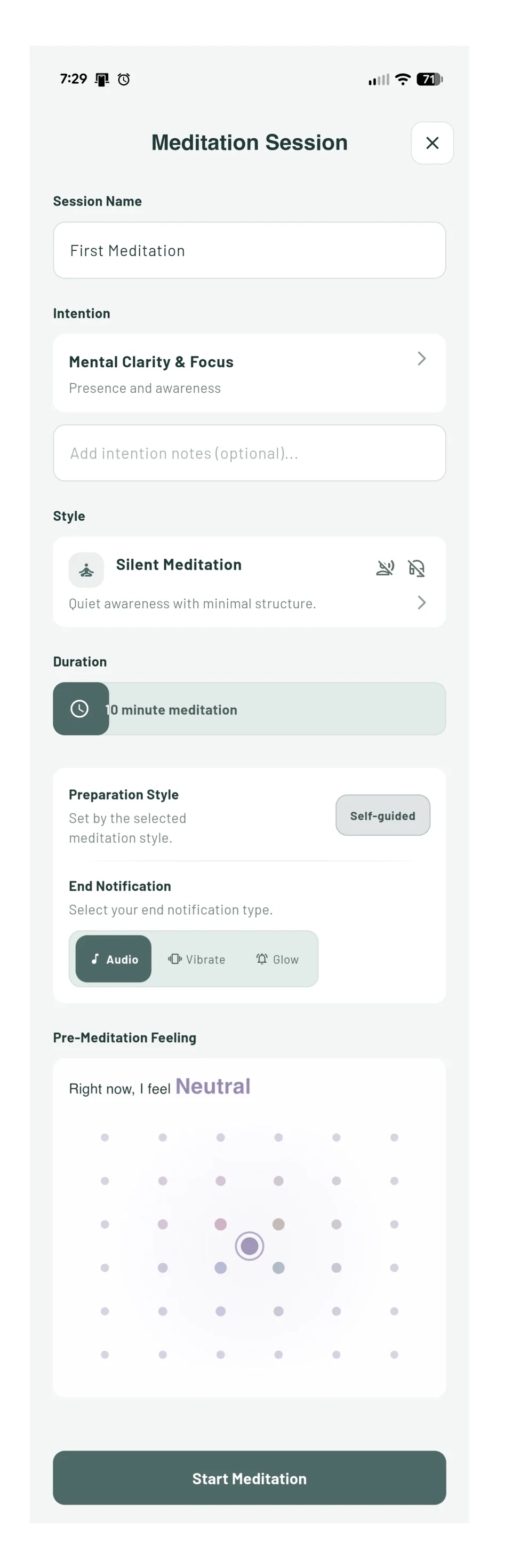

Real app captures supplied and cleared for public display by the product owner. Images illustrate settings and controls; they do not start a meditation.
Questions you might have.
- Am I doing it wrong if I keep thinking?
- A thought appearing does not mean you failed. Notice that attention has moved, then return to your anchor. You are practicing the return, rather than trying to prevent every thought.
- Do I have to sit cross-legged or close my eyes?
- No. Use a supported position that works for you. Keeping your eyes open is an option. Change position if you are uncomfortable; there is no posture you need to endure.
- Should I control my breathing?
- For this practice, let breathing remain natural. You are noticing its sensations, rather than following a breathing pattern. Choose sounds or contact with the floor if that is more comfortable.
- What if I do not feel calmer afterward?
- This guide does not promise a particular feeling. You can notice an unsettled or ordinary experience without calling it a bad session. Stop if practice becomes distressing, and seek appropriate support if needed.
- Do I need Mind2Mind to follow this guide?
- No. All six steps work without the app, an account, a recording or a subscription. The two app images are optional illustrations, not controls you need to use.
Continue at your own pace.
You can return to these six steps whenever you want to practice. If you are exploring the app, its current availability is below.
 App Store: not released
 Google Play: not released
Mind2Mind is currently free to use in the US. It has not yet been released in the app stores.
Sources and scope.
This is an introductory practice guide, not medical advice. These resources informed its instructions and safety wording; they do not endorse Mind2Mind.
- NHS — How to meditate for beginnersComfort, wandering attention and ending a practice.
- NHS — MindfulnessNoticing present experience and returning attention.
- NCCIH — Meditation and Mindfulness: Effectiveness and SafetySafety limitations and keeping appropriate health care.